Concrete retaining walls in Springdale AR - a wall that drains and holds the yard
Is your slope sliding, your old wall leaning or water pooling behind it? We build concrete walls that hold the ground and let water out.
- Service
- Concrete retaining walls
- Call
- (479) 231-3503
How can you tell your slope needs a retaining wall?
Wall leaning or bulging
If an old wall tips forward at the top or bows out in the middle, the ground behind it is winning, usually because water has built up back there. The longer it goes, the further it leans, and a wall that's still standing is a lot easier to deal with than one that's come down.
Soil sliding down the bank
Dirt and mulch washing onto the patio or driveway after every rain means nothing is holding that slope. Each storm takes a little more, and over time it can eat away at whatever sits at the bottom.
Water stuck behind the wall
Soggy ground along the top, or a wall that stays dark and wet long after the rain stops, tells you the water has no good way out. That trapped water pushes on the wall, and it's usually where the leaning in the first tile starts.
Do you need a concrete retaining wall in Springdale?
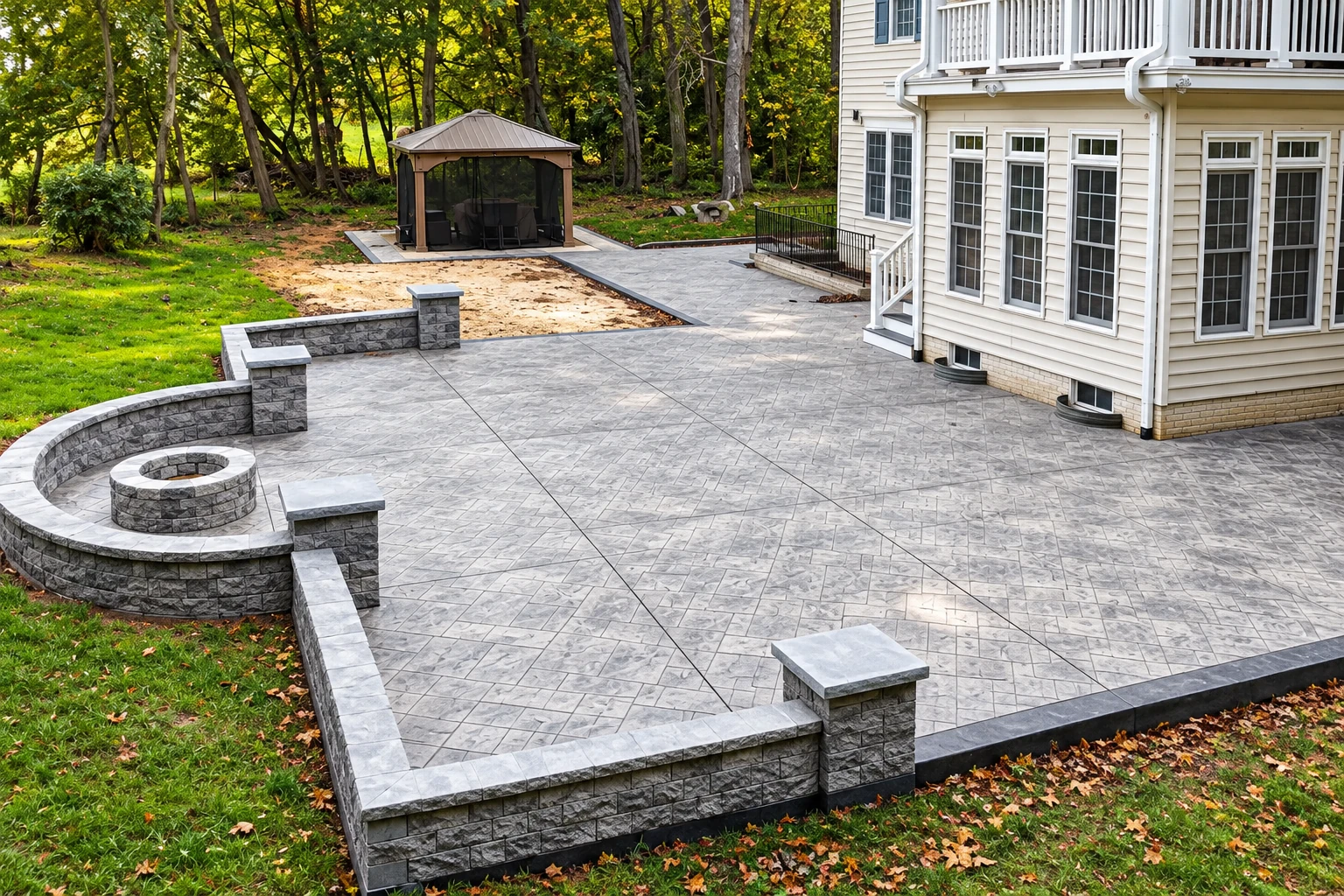
A concrete retaining wall holds back a slope so the ground behind it stays put, and in Springdale we build them for yards, driveways and building sites where the dirt keeps sliding or there's no flat ground to use. The wall works by standing up to the sideways push of the earth behind it, and wet ground pushes harder, which is why I spend as much time on the drain as on the wall itself.
Maybe your backyard slopes toward the house, a bank keeps sliding onto the driveway, or an old timber wall is starting to lean out. The price mostly moves with how tall and long the wall needs to be, how much digging and hauling it takes, whether it curves and how close we can get a truck, while the schedule turns on the size of the dig and dry weather for the pour. We're licensed and fully insured, and since the state issues a limited home improvement license for home projects under $50,000, labor and material included, and an unlimited one for projects of any size, it's fair to ask any contractor which one they hold before you sign.
Details to note before an estimate
- Rough length and height of the wall
- Photos of the slope from a few angles
- Where rainwater runs across the yard now
- Any old wall or timbers coming out
How we build concrete retaining walls
I start every wall with the water, because that's where most wall trouble begins. Before anything gets dug, we look at where rain runs across your yard today and talk through where it'll end up once the wall is in. Then our crew digs out and packs the base, builds the footing, which is the wide base the wall stands on, sets the forms and ties in the rebar, the steel inside that helps the concrete take the push of the dirt, and pours the wall. The drain and the fill behind it get as much care from us as the concrete does, and only once they're in do we put the ground back and clean up.
A new wall often makes room for other work. If you're terracing a backyard for a pool, we can pour concrete pool decks on the flat ground the wall creates, and if you're leveling a spot for a shop or storage building, we handle concrete floor installation as well.
Other work that often goes with a wall
Concrete pool decks
Terracing a sloped backyard often frees up room for a pool, and the deck around it needs a firm base and good drainage too.
Concrete floor installation
If the wall levels a spot for a shop, shed or garage, a concrete floor on that flat ground turns it into usable space.
What happens when you call about a retaining wall in Springdale?
Call or send the form
Tell us roughly how long and tall the wall needs to be, and send a few photos of the slope if you have them. We'll set up a time for me to come out.
I walk the slope with you
I come out myself, look at the ground and where the water runs now, and ask plenty of questions. You get an estimate for the wall type and drain plan we talked through, so you see the price before anything is dug.
Our crew builds the wall
Our crew does the digging, forming and pouring with me on site the whole way. The drain and the fill go in before the ground is put back, so nothing important gets buried unchecked.
We walk it together
Before we pack up, we walk the finished wall with you. I'll show you where the water comes out so you know what to keep clear.
Questions before you book a retaining wall
What does a concrete retaining wall cost in Springdale?
A poured concrete retaining wall about 3 feet high in Springdale usually costs about $33 to $36 per square foot, with the concrete, materials and supplies included. That range leaves out stamped or decorative finishes, major demolition or digging, curved forms and walls taller than 3 feet, and the site and the design move it too. I come out across Springdale and the cities around it to price your wall on the slope itself.
Should I build a gravity wall or a cantilever retaining wall?
A gravity wall holds the ground back with its own weight, while a cantilever wall is reinforced concrete standing on a footing, and it uses much less concrete but needs more design and careful building. Where there's room, I like a gravity wall because there's less to get wrong, and where space is tight, the cantilever is worth the extra planning as long as the design is settled before we pour. If the spot is hard to reach or needs tight curves, a segmental block wall built from small, light units can be the better fit.
What causes a concrete retaining wall to fail?
Poor drainage is by far the most common cause of retaining wall trouble, and left alone those problems can grow until the wall fails. Clay is hard to drain once it's soaked, so wall designs almost always call for a drainable granular backfill, a coarse fill water runs through, which lowers the side pressure wet clay puts on the wall. When you compare quotes, compare the drain plans, and know that our work is backed by our satisfaction guarantee.
Where can my retaining wall's drain water go in Springdale?
In Springdale, drains and pipes carrying water from any structure have to run to a public right of way, a drainage easement or a public drainage system, and they can't be pointed at a neighbor's property. That's why we settle where your water ends up before we design the drain, not after the wall is built.
Can I build a retaining wall near a creek in Springdale?
You can, but on Springdale jobs with clearing and grading, the city wants the ground left undisturbed for at least 25 feet from the top of the bank of any creek, stream, river, lake or other water body. Bigger sites need more, because work that disturbs soil or clears plants on half an acre or more needs an approved stormwater pollution prevention plan, and the city's Engineering Department has to approve it before construction starts.
How do I keep a retaining wall draining after it's built?
Keep the weep holes, the small drain openings along the face of the wall, open and clear. They often clog with poor backfill, plants, animals or trash, and a plugged weep hole does nothing for the wall. A quick look after big storms and pulling weeds away from them goes a long way.
Get a free on-site estimate for your retaining wall
Send the form and we'll get back to you within one business day to set up a visit. I'll come out myself, walk the slope with you, ask plenty of questions and leave you a free estimate, with no obligation to go ahead.
Explore our services and areas
Services
- Concrete driveway building
- Concrete patio construction
- Stamped concrete services
- Concrete sidewalk building
- Garage floor concrete
- Decorative concrete
- Concrete floor installation
- Concrete pool decks
- Concrete steps construction
- Slab foundation building
- Foundation installation
- Concrete parking lot building
- Concrete footings
- Foundation raising
- Concrete cutting
Talk through your retaining wall plan
Have the wall's rough length, height and a few slope photos ready, and if the job needs a permit or city inspection, we handle the paperwork and book it.